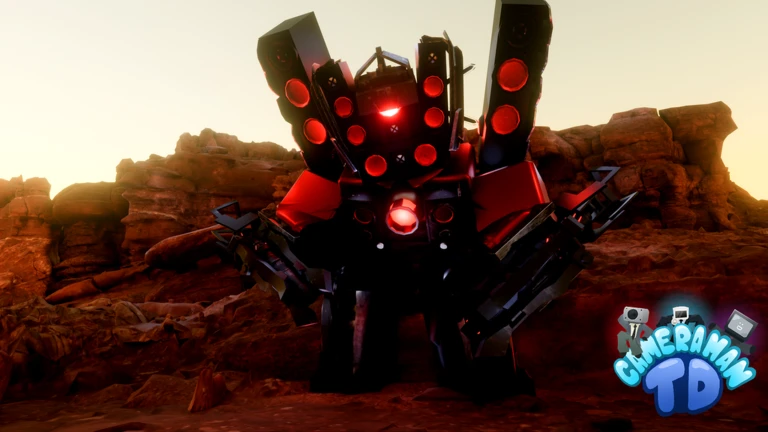
- Cameraman Tower Defense solo mode rewards balanced loadouts over expensive units
- Open with cheap damage near the first bend before investing in economy
- Save currency for milestone upgrades ahead of boss waves instead of spamming units
- Use corners and long lanes so units attack for the maximum portion of the route
- Pick repeatable clears on the highest difficulty you can finish without leaks
Solo Mode Overview: Why Solo Plays Differently
Solo mode in Cameraman Tower Defense puts every responsibility on one player: opening defense, income, upgrades, and boss damage. Unlike co-op matches where roles are split among teammates, a solo player must cover all phases of the match with a limited unit loadout and a single pool of currency. That makes planning your build before the first wave more important than raw unit rarity.
Because you cannot rely on another player to cover a missed lane or rescue a leaking wave, solo runs punish overspending early. A slightly cheaper defense that survives the first five waves cleanly is worth more than an expensive unit placed too late to matter.
Every currency decision in solo mode should answer one question: does this keep the next wave from leaking? If not, the money is better saved for an upgrade or a late-game damage unit.
The table below summarizes how solo mode changes your priorities compared to co-op:
| Aspect | Solo Mode | Co-op Mode |
|---|---|---|
| Opening defense | You place everything yourself | One player specializes in it |
| Economy timing | Only after stable early waves | Can be delegated to a specialist |
| Boss damage | Reserve funds yourself | Assigned player saves currency |
| Lane coverage | Compact, overlapping placements | Split among players |
| Risk of leaks | High if you overspend early | Lower with coordination |
Best Solo Unit Roles and Loadout
A reliable solo loadout in Cameraman Tower Defense should combine four roles rather than stacking identical damage units. Compare the core roles below and pick units from your collection that fill each slot at the lowest cost.
Early Damage
- Low-cost, fast attack
- Covers entrance and first turn
- Handles opening toilet waves
Economy
- Generates income over time
- Place in safe positions
- Only after waves are stable
Sustained Damage
- Reliable single-target output
- Mid-game carry
- Upgrade before adding copies
Late Carry / Boss
- High damage, long range
- Position on longest lane
- Fund with saved currency
Use this comparison to judge which slot each unit in your inventory fills:
| Role | Cost Profile | Range | Priority | Solo Notes |
|---|---|---|---|---|
| Basic damage | Very low | Short-medium | Wave 1-3 | Place first, upgrade later |
| Area damage | Low-medium | Medium | Mid waves | Strong at bends and intersections |
| High single-target | Medium-high | Medium-long | Late waves | Main boss answer |
| Support/utility | Medium | Varies | Situational | Use when waves leak repeatedly |
| Boss-focused | High | Long | Final waves | Save currency, place on longest lane |
Do not fill every slot with high-cost units. Solo mode runs on one income stream, and a loadout that cannot act during wave one will lose before your late carry ever pays off.
Solo Match Flow: Step-by-Step
Follow this sequence every solo match to keep your defense stable from the opening wave through the boss encounter.
Scout the Route Before Wave One
Identify the entrance, the first major bend, and the longest straight lane. Your early damage goes at the bend; your boss carry goes where it covers the most path.
Place Cheap Opening Damage
Deploy your lowest-cost damage unit near the first turn so it attacks enemies for the maximum time. Keep a small currency reserve instead of spending everything.
Stabilize, Then Invest in Economy
Once the first waves clear without leaks, add economy units in safe positions that do not delay defensive coverage of any lane.
Upgrade Before Expanding
Upgrade your existing damage units rather than buying duplicate placements. Improved range and damage usually outperform a second un-upgraded unit.
Set Up the Boss Kill Zone
Before the announced boss wave, place your high-damage carry on the longest lane, top off upgrades, and hold currency for emergency placements if the boss leaks through.
If you cannot afford your boss carry plus one emergency placement when the boss wave counter appears, you spent too much during the mid game. Rebuild the run with a tighter economy plan.
Solo Strategy by Game Phase
Each phase of a solo match has a different objective. Use this phase table to check your decisions against what the wave structure demands.
| Phase | Waves | Main Goal | Do | Avoid |
|---|---|---|---|---|
| Opening | First 3-5 | Zero leaks | Cheap damage at first bend | Expensive summons |
| Transition | Mid waves | Build income | Add economy, first upgrades | Duplicate placements |
| Pressure | Late regular | Damage scaling | Upgrade sustained damage | Spending your reserve |
| Boss | Final waves | Kill before exit | Longest-lane carry, saved currency | Reactive panic buys |
For farming runs, pick the highest difficulty your team clears consistently. A fast, repeatable stage usually out-earns a harder stage that frequently fails, and reliable clears also keep your reward collection steady across sessions.
Move up in difficulty only when your current stage finishes without leaks and without emergency spending. If a clear feels lucky rather than stable, stay one level lower and improve your upgrade timing first.
Solo Readiness Checklist
Run through this checklist before and during every solo match to catch the mistakes that cost the most runs:
Before Each Solo Match:
- Loadout covers all four roles: opening damage, economy, sustained damage, boss carry
- Route scouted for first bend and longest lane
- Opening unit placed before wave one starts
- Currency reserve maintained through mid waves
- Boss carry positioned and upgraded before the final waves
Solo Mode FAQ
Q: Is solo mode harder than co-op in Cameraman Tower Defense?
Solo mode concentrates every role on one player, so mistakes cost more. Co-op splits opening defense, economy, support, and boss damage among teammates, which lowers risk when the group coordinates. A well-built solo loadout can still clear most standard stages consistently.
Q: Should I summon for new units before a solo run?
Avoid spending all available currency on summons right before entering a match. Keep enough for your first useful placement and early upgrades, and summon after your session instead so a bad summon never weakens your next run.
Q: What is the best placement for boss units in solo mode?
Place boss-focused units where they cover the longest portion of the route, typically along the final straight lane or a central position that stays in range for most of the path. Long attack time matters more than raw position near the exit.
Q: How do I know when to move to a higher difficulty?
Move up only when your current stage clears without leaks and without emergency spending. If clears feel unstable, remain one difficulty lower and refine your economy timing and upgrade order first.