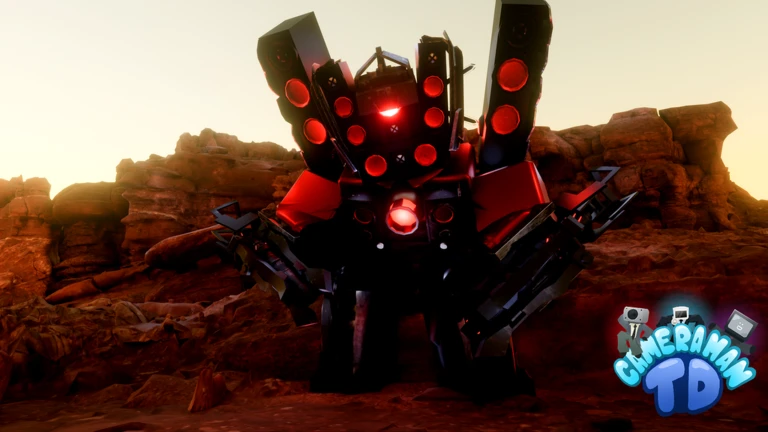
- Cameraman Tower Defense tips and tricks start with placement: cover corners and long path sections.
- Economy discipline: upgrade reliable damage before buying extra units.
- Team roles: divide opening damage, economy, support, and boss damage in co-op.
- Boss waves: save currency for milestone upgrades before the strongest waves.
- Coin farming: repeatable clears beat risky high-difficulty attempts.
Core Placement and Economy Fundamentals
These Cameraman Tower Defense tips and tricks begin with the two systems that decide most matches: unit placement and currency management. Enemies only take damage while they are inside a unit's range, so every placement should maximize the time each enemy spends under fire. Corners, bends, and long straight lanes are the highest-value positions on nearly every map because a single unit can attack the same enemy across multiple path sections.
Economy is equally important. Spending all of your currency on summons or cheap units before a match leaves you unable to respond when waves strengthen. The reliable pattern is: cheap opening damage first, stable clears for several waves, then economy investment, then late-game scaling.
| Position Type | Value | Best Unit Fit | Priority |
|---|---|---|---|
| Corner / bend | Enemies stay in range across two path sections | Area damage units | ★★★★★ |
| Long straight lane | Extended attack time per enemy | Long-range single-target | ★★★★☆ |
| Map center covering multiple routes | Coverage across lanes | Support and buff units | ★★★★☆ |
| Near the entrance | Maximum total attack time | Early-wave damage | ★★★☆☆ |
| End of the path | Catches leaked enemies | Flexible cleanup damage | ★★★☆☆ |
Before placing any unit, trace the enemy route with your eyes. If the unit's range circle covers only a short path section, move it. A corner placement typically doubles effective attack time compared with a mid-lane spot.
Watch for maps with multiple routes: clustering every unit in one area leaves other lanes uncovered, which is one of the most common reasons teams lose mid-game waves.
Match-Opening Strategy: Step by Step
A consistent opening sequence wins more matches than any single powerful unit. Follow this flow every time you enter a match, whether solo or in a co-op lobby.
Build a Balanced Loadout
Equip an affordable early-wave damage unit, a reliable mid-game damage option, an economy pick, and one late-game carry. Avoid loading only expensive or specialized units that leave the opening waves undefended.
Pick the Right Difficulty
Start with the easiest accessible difficulty when learning wave flow. Enter hard modes only after you understand placement limits and upgrade timing on that map.
Place Opening Damage at the First Bend
Deploy your cheapest dependable damage near the entrance or first major turn so it stays active from wave one and earns value for many waves.
Stabilize, Then Invest in Economy
Once early waves clear without leaks, add economy units in safe positions that do not delay defensive coverage.
Upgrade Before Expanding
Upgrade the units carrying your damage instead of buying unnecessary extras. Compare upgrade costs against a unit's role, not just its rarity.
Save for Boss Waves
Hold enough currency to complete key upgrade paths before the final encounters, and reserve long-range positions for boss damage units.
Do not spend all available currency on summons before entering a match. Players who enter with no reserve cannot respond to faster or denser waves, and one leak chain can end the run.
Unit Roles and Team Composition Tricks
Unit value depends on more than rarity. A balanced team assigns clear roles so every slot contributes across the whole match. Use these four role categories when building any team.
Opening Damage
- Low cost, fast attack
- Covers waves 1 through mid-game
- Place at first bend or entrance
- Upgrade only until replaced
Economy
- Generates income over time
- Invest only after waves are stable
- Place in safe, non-critical spots
- Enables faster late-game scaling
Support and Control
- Buffs, debuffs, slows
- Place centrally to reach multiple clusters
- Limited placement preserves balance
- Highest value in co-op teams
Boss and Late Damage
- High single-target output
- Long range, slow attack speed
- Reserve best firing lanes for these units
- Fund through milestone upgrades
| Build Type | Core Roles | Best Substitution | Recommended Stage |
|---|---|---|---|
| Solo Progression | Opening damage, economy, single-target, late carry | Swap economy for extra damage on hard openings | Early progression, standard clears |
| Co-op Economy Team | Dedicated opener, economy specialist, support, boss damage | Second damage dealer if underpowered | Multiplayer, coordinated farming |
| Standard Farming | Low-cost wave clear, compact economy, area damage, cleanup | Longer range on split-lane maps | Normal difficulty, coin farming |
| High-Difficulty Challenge | Sustained damage, burst, control, support | Trade support for damage when output is short | Hard stages, boss-focused clears |
In co-op, assign roles before spending any currency. One player stabilizes the opening, one focuses income, and others prepare support and boss damage. Overlapping identical coverage wastes currency that the team needs for late waves.
Boss Waves and Enemy Pressure Counters
Boss encounters and high-pressure waves punish single-purpose teams. The enemies that end runs usually fall into predictable categories, and each has a direct counter.
| Enemy Type | Threat Pattern | Best Counter | Placement Note |
|---|---|---|---|
| Basic groups | Large numbers, low health | Area damage | Cluster at bends and intersections |
| Fast enemies | Cross range before taking full damage | Fast-attack or slow/control units | Cover entrance lanes early |
| High-health elites | Absorb sustained fire | High single-target damage | Use longest firing lanes |
| Bosses | Massive health, arrive in final waves | Dedicated burst plus support | Pre-position before wave starts |
| Mixed dense waves | Combined speed and durability | Layered defense, not one damage type | Keep cleanup damage near path end |
Two habits separate players who clear boss waves from those who do not:
- Save milestone currency: complete key upgrade paths on your boss damage units before the strongest waves arrive, rather than spreading small upgrades everywhere.
- Layer damage types: sustained damage handles ordinary waves while burst and control cover the boss window. A team with only one damage type will fail on combinations.
Do not place boss damage units where they only cover a short path section. Position them so they remain active for the greatest portion of the route, and keep support units where their buffs reach every defensive cluster.
Coin Farming and Session Checklist
The most efficient coin strategy is built around reliable clears, short match times, and consistent reward collection. A slightly lower stage with fast, repeatable wins usually outperforms a difficult stage that frequently fails.
Farming priority order:
- Claim every daily, login, event, and milestone reward before starting runs.
- Redeem available codes through the in-game code interface.
- Farm the highest difficulty you can clear without retries.
- Improve clear speed before chasing maximum difficulty.
- Use coordinated co-op runs for higher-value stages.
- Convert duplicate units you do not need for current builds.
Before Each Farming Session:
- Claim all daily and event rewards
- Redeem any active codes in the code interface
- Confirm loadout covers opening, economy, and boss roles
- Record average clear time and reward per run
- Convert excess duplicate units after the session
Track your average completion time and reward per clear. When a harder stage's extra reward does not justify its failure risk and longer runtime, stay on your current stage and reinvest in faster clears instead.
FAQ
Q: What is the most important Cameraman Tower Defense tip for beginners?
Placement and economy discipline. Put cheap, reliable damage at the first bend so it stays active from wave one, then stabilize before investing in economy. Upgrade dependable damage before buying extra units, and always keep currency in reserve for stronger waves.
Q: Should I spend currency on summons before a match?
No. Entering a match with no currency reserve leaves you unable to respond when waves strengthen. Summon to expand your collection gradually, and compare each unit's cost, range, damage, and upgrade path instead of judging by rarity alone.
Q: How should a co-op team divide roles?
Assign one player to opening defense and early upgrades, one to economy, one to support or control, and one or more to boss and late-wave damage. Dividing responsibilities prevents overlapping coverage and duplicated spending, which are the main reasons co-op teams fail late waves.
Q: Which difficulty is best for farming coins?
The highest difficulty your team can clear consistently without retries. Fast, repeatable wins on a slightly easier stage usually earn more coins per hour than risky attempts on a harder stage that often ends in failure.