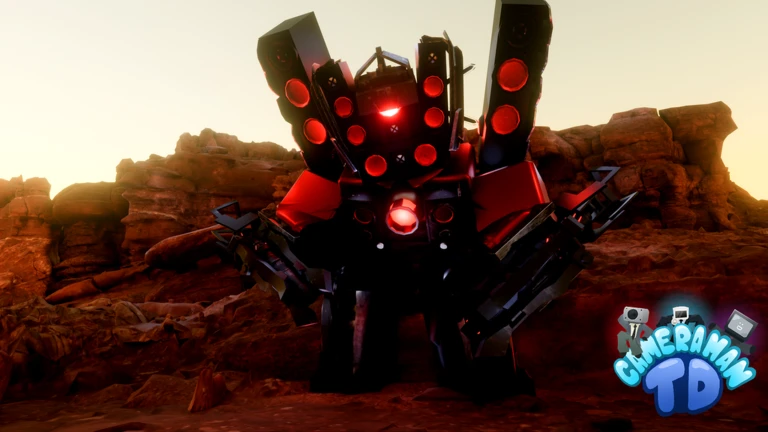
- Cameraman Tower Defense one unit play focuses your entire economy on a single high-value unit
- Best candidates are units with strong upgrade scaling, long range, and reliable sustained damage
- Placement matters most: one unit must cover bends and long path sections
- Save currency between waves so you can hit key upgrade milestones before boss encounters
- Co-op warning: this strategy works best in solo or when teammates cover the opening waves
What Is a One Unit Strategy?
A one unit strategy in Cameraman Tower Defense means committing your in-match currency to repeatedly upgrading a single unit instead of spreading it across many placements. Instead of building a wide defense, you concentrate all resources into one position with maximum path coverage and scale it as the waves grow stronger.
This approach trades early flexibility for late-game power. One heavily upgraded unit often outperforms several lightly upgraded ones because upgrade scaling in tower defense games typically compounds: each level raises damage, range, or attack speed while the placement stays active the whole match.
The strategy suits three situations:
- Solo progression where your unit pool is still small
- Farming runs on maps with a long, predictable route
- Challenge attempts where total late-wave damage is the bottleneck
A single-point defense has no backup. If the map has split routes, or if a fast enemy type slips past your coverage window, you will leak. Always verify the route layout in the lobby before committing.
The table below compares the one unit approach against a standard spread build:
| Factor | One Unit Build | Spread Build |
|---|---|---|
| Early-wave safety | Weaker until first upgrades | Stronger from the start |
| Late-wave damage | Excellent when fully upgraded | Often plateaus |
| Currency efficiency | High if upgrades scale well | Lower per unit |
| Split-route maps | Risky | Safer |
| Boss performance | Strong sustained focus fire | Depends on composition |
| Best mode | Solo story, farming | Co-op, hard mode |
Choosing the Right Unit Role
Not every unit fits a one unit strategy. In Cameraman Tower Defense, units generally fall into combat roles such as early single-target damage, area damage, long-range high-damage attackers, support, and boss-focused specialists. For a concentrated build, you want a unit whose upgrade path keeps improving both damage and range.
| Unit Role | One Unit Viability | Reason |
|---|---|---|
| Single-target damage (starter) | Low | Cheap but weak scaling past mid waves |
| Area damage unit | High | Hits groups; great on dense wave maps |
| High-damage unit | Very High | Long range plus strong upgrade scaling |
| Support unit | Low | Needs other units to buff |
| Boss-focused unit | High | Excellent late, weak opening |
Area Damage Carry
- Clears dense waves
- Best on maps with concentrated paths
- Moderate upgrade costs
High-Damage Carry
- Best overall scaling
- Long range covers long lanes
- Needs early protection
Boss-Focused Carry
- Melts high-health targets
- Slow attack may leak fast enemies
- Ideal for boss-heavy late waves
Judge candidates by upgrade value, not rarity. Compare the damage and range gained per upgrade level against the cost. A cheaper unit with efficient scaling frequently beats a rare unit with expensive, weak upgrades.
Step-by-Step One Unit Execution
Follow this sequence from the lobby to the final boss wave. The order matters: a misplaced start wastes the currency your whole strategy depends on.
Scout the Map in the Lobby
Check the route for bends and long straight sections before joining. A one unit build needs a placement spot where a single range circle covers as much path as possible, ideally a corner or central intersection.
Enter with a Lean Loadout
Equip your chosen carry plus one cheap backup damage unit for emergencies. Do not spend summons before the match; keep your starting currency ready for the first placement.
Place on Maximum Coverage
Deploy the unit where it covers a bend plus the lane before and after it. This maximizes the time every enemy spends inside its range, which is the core math of a one unit build.
Upgrade Before Expanding
Push upgrade levels early rather than placing second units. Each upgrade improves the same coverage window that already covers the whole route.
Bank Currency for Boss Waves
Save enough between waves to buy the next milestone upgrade right before the strongest waves. Boss and elite encounters are where full scaling pays off; arriving under-upgraded is the most common failure.
Identify your unit's biggest power spike level before the match starts. Time your banked currency so that spike lands just before the first boss or elite wave, not after.
Placement and Economy Timing
Placement is the entire strategy when you run one unit. These positional rules apply across most maps in the game:
| Placement Spot | Coverage Quality | Notes |
|---|---|---|
| Inside a tight bend | Excellent | Enemy stays in range through the whole turn |
| Long straight lane | Good | Long firing time per enemy |
| Central intersection | Excellent | Covers multiple route sections |
| Near the spawn | Moderate | Long recovery time if leaks happen |
| Near the exit | Risky | Only useful as a cleanup position |
Economy rules to pair with placement:
- Place the unit first, upgrade second, extra units only if the run is leaking
- Never end a wave with unspent currency unless you are deliberately banking for a spike
- In co-op, ask teammates to cover the opening waves while you scale your carry
- Re-test the build after balance updates; damage or range changes can break old timings
In multiplayer matches, communicate your plan before spending. One player running a one unit build works well when teammates handle early defense, economy, and crowd control roles around it.
One Unit Checklist and Common Mistakes
Before your next run, confirm each item on this list. Every point addresses a frequent reason concentrated builds fail.
Pre-Match Checklist:
- Map route has a single main path or a central intersection
- Chosen unit has strong damage and range upgrade scaling
- Placement spot covers a bend plus adjacent lanes
- Upgrade spike level identified before the match
- Banking plan set for boss or elite waves
Common mistakes to avoid:
- Placing the unit where it only covers a short path section
- Spending currency on summons mid-match instead of upgrades
- Expanding to second units before the carry is upgraded
- Running the build on split-route maps without teammate coverage
- Ignoring balance updates that change upgrade costs or scaling
If enemies leak through a section your unit cannot reach, switch immediately. Add a cheap damage unit at the leak point rather than continuing to upgrade a position that no longer covers the threat.
FAQ
Q: Is a one unit strategy viable in Cameraman Tower Defense hard mode?
It can work with a high-damage or boss-focused unit with excellent upgrade scaling, but hard mode punishes single-point defenses. Expect to add at least one supporting placement or play in co-op where teammates cover early waves.
Q: Which unit type is best for a one unit build?
Long-range high-damage units are generally the strongest candidates because their range covers more path per placement and their upgrade scaling stays relevant into boss waves. Area damage units are a close second on maps with dense, concentrated enemy groups.
Q: Should I upgrade one unit fully before placing a second?
Yes in most cases. Upgrade scaling on an already well-placed unit usually provides more value per coin than a new placement with weak base stats. Only place a second unit when leaks show a genuine coverage gap.
Q: Does the one unit strategy work in co-op multiplayer?
It works when coordinated. Tell your team your plan so one player covers opening defense, another handles economy or support, and you commit your currency to scaling a single late-game carry in the best position.